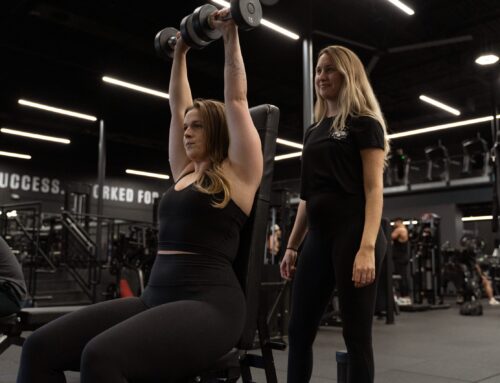

The mind-muscle connection is a strength-training technique in which you use your mind to activate a target muscle and better sense how effectively it’s engaging.
It’s backed by significant motor-learning research, but whether it can help you achieve a better physique depends on your technique and training goal. How you apply the focus matters, and it’s not the best approach for every exercise or load.
In this article, the certified personal trainers at Carbon Performance explain:
- What mind-muscle connection is and what it looks and feels like in practice
- What science says about the effectiveness of internal focus on muscle activation, growth, strength, and performance
- Expert technique tips for improving mind-muscle connection and implementing it into your training
- The best exercises for mind-muscle connection and when another approach may work better
What Is Mind-Muscle Connection?
Mind-muscle connection is a fitness-industry term for an exercise-science concept called internal focus of attention. The theory is that by mentally focusing on a specific muscle, you can change how actively it contributes to movement, leading to greater activation and, in some cases, greater muscle growth.
Your brain and muscles already communicate naturally every time you move, so “connection” doesn’t mean creating something new. The technique involves consciously changing where you direct your attention during the movement.
For example, during a leg extension, your quads contract whether you think about them or not. Using mind-muscle connection means mentally focusing on and visualizing what your quadriceps are doing as you raise and lower the weight, including the sensations of the muscles shortening, lengthening, and producing tension.
Instead of the broader fullness and tightness of a traditional pump that builds with each set, mind-muscle connection feels more distinct and localized, with tension concentrated deep in the target muscle from the very first rep.
But mind-muscle connection is more than a subjective feeling. Research shows it produces measurable neurological changes in how the brain organizes and controls movement that can alter muscle activity during exercise. Whether it provides a training advantage depends on your goals, exercise selection, and the amount of weight lifted.
The Science Behind the Mind-Muscle Connection
The mind-muscle connection, known in exercise science as internal focus of attention, is not bro science. While it is often misunderstood and its benefits are sometimes overhyped, the strategy has been studied extensively in kinesiology and motor learning research, with a focus on its potential effects on target-muscle activation, muscle growth, and exercise performance.
Studies typically compare internal focus with external focus, where attention is directed toward the outcome of the movement, such as moving the weight or pushing against the floor. The findings show that attentional internal focus can positively impact training outcomes, but not always in the same way.
Internal focus appears to be more useful during certain moderate-load exercises when the goal is to increase target-muscle activation and may support muscle growth in some contexts, while an external focus tends to be more effective when maximizing strength, muscular endurance, or overall movement performance is the priority.
Studies Show Mind-Muscle Connection Can Increase Target-Muscle Activation
One of the clearest science-backed benefits of mind-muscle connection is increased muscle activation. Across multiple resistance exercise studies, EMG research shows that lifters can measurably change the level of activity in a target muscle simply by shifting their focus toward it.
One example is a bench press study, in which lifters increased pectoral activity by 22% when instructed to focus on the chest, and triceps activity by nearly 26% when instructed to focus only on the triceps. A newer machine shoulder-press study found similar results. Deltoid activity increased by about 13% when participants only focused on the delts, and triceps activity increased by around 19% when they shifted concentration to the triceps.
Both demonstrate that mind-muscle connection can measurably alter activity in the targeted muscle.
Research Suggests Mind-Muscle Connection May Support Muscle Growth
Long-term research on whether increased muscle activation from the mind-muscle connection leads to greater muscle growth is limited, but there are promising studies.
For example, in a frequently cited resistance-training study on mind-muscle connection, participants completed eight weeks of resistance training using either an internal focus on the working muscle or an external focus on moving the weight. The group using mind-muscle connection experienced significantly greater growth in the elbow flexors, including the biceps. However, researchers did not find the same advantage in the quadriceps.
The findings suggest that mind-muscle connection may help support greater muscle growth in certain muscles and exercises, but they don’t show that increased activation always leads to more growth or that consciously focusing on a muscle is necessary for hypertrophy.
Research Shows Mind-Muscle Connection May Be Less Effective for Strength and Performance Outcomes
While studies show that mind-muscle connection can increase targeted muscle activation and may support muscle growth, the evidence points in a different direction for strength and overall performance.
A meta-analysis of attentional-focus research found greater acute muscular strength with an external focus, while a systematic review and meta-analysis found generally better outcomes for motor performance and learning. Another meta-analysis found that external focus also improved muscular endurance compared with both internal focus and no specific attentional strategy.
Together, these findings suggest a trade-off. The same internal focus that may help target a muscle during certain hypertrophy-focused training may be less effective when the goal is maximum force, endurance, or efficient movement performance.
However, newer analyses have challenged the idea that an external focus is universally superior for strength and motor performance, suggesting the advantage may be smaller and less consistent than earlier research indicated.
Key Takeaway From Mind-Muscle Connection Research
Mind-muscle connection can be an effective training tool, but it’s not a rule that must apply to every rep of every exercise. A well-designed training program can use both strategies, with an external focus generally better suited for heavy compound or performance-focused lifts and mind-muscle connection more useful for targeted isolation exercises and moderate-load hypertrophy work.
Techniques to Improve Mind-Muscle Connection
When using mind-muscle connection, the goal is to maintain attention on the target muscle throughout the movement. Proper exercise selection, visualization, lower weight, slower tempo, and performance cues can all help.
Choose Isolation Exercises
Isolation exercises are single-joint movements designed to place most of the training load on a single muscle or muscle group. They are especially useful for mind-muscle connection because there are fewer moving parts competing for your attention. With less complexity in the movement, it becomes easier to slow down, target the intended muscle, and maintain focus throughout the rep.
Visualize the Muscle Working
Mental imagery activates many of the same motor-planning networks involved in actually performing a movement, which can help establish your internal focus before you begin. Before each set, take a few seconds to picture the target muscle shortening and lengthening through the movement. Continue that visualization as you complete each rep, pairing what you pictured with the tension you feel in the muscle.
Use a Weight You Can Control
Lifting heavy has an important place in building muscle, but if the load demands all of your attention just to complete the rep, it becomes much harder to maintain the internal focus needed to deliberately target the working muscle. Choose a weight that is still challenging enough to create meaningful muscular tension, but light enough that you can control the entire rep without losing focus on the target muscle.
Slow Your Tempo
Slow the movement enough to stay aware of where the tension is throughout the entire rep, especially as the target muscle shortens and then lengthens under load. This does not mean moving in exaggerated slow motion. The goal is to use a deliberate, controlled pace that gives you time to feel each phase of the movement without sacrificing the set’s challenge. A common tempo used is lifting the weight for one to two seconds, pausing for one second, then taking three seconds to lower.
Use Tactile and Visual Cues
Tactile and visual cues are simple ways to give your brain a clearer reference point for where you want to direct your attention. This might mean briefly touching the target muscle before or during a set, or watching the muscle in a mirror as it contracts and lengthens. Then, use that physical or visual reference to keep your focus anchored on the target muscle throughout each rep.
Why Lowering the Weight Can Help You Feel the Muscle
Mind-muscle connection becomes harder to maintain as loads get heavier because more of your attention shifts toward completing the rep rather than what the target muscle is doing. Reducing the load can also make it easier to limit momentum, maintain control, and deliberately manage both phases of the rep.
Studies support the effectiveness of lighter loads in mind-muscle training. In a frequently cited bench press study, lifters increased activity in the muscle they intentionally focused on at loads up to 60% of their one-rep max, but the effect was no longer evident at 80% 1RM, suggesting that selective muscle activation through intentional focus may be limited at heavier loads.
The takeaway isn’t that you shouldn’t use a challenging weight; it’s to use mind-muscle connection as a controlled, moderate-load tool rather than a max-effort strategy.
What Are the Best Mind-Muscle Connection Exercises?
When using mind-muscle connection, isolation-style exercises that let you focus on the target muscle without coordinating a heavy or highly technical movement are typically better than compound movements such as squats and bench press.
Exercises that are particularly well-suited for mind-muscle connection include:
- Dumbbell or cable curls: Focus on the biceps shortening as you curl and lengthening as you lower.
- Cable or machine flies: Think about bringing your upper arms together by contracting your chest.
- Lateral raises: Concentrate on lifting the arms with the side delts rather than simply raising the dumbbells.
- Cable pressdowns: Focus on contracting the triceps while extending the elbows.
- Leg extensions: Think about the quads shortening as you straighten the knee.
- Leg curls: Focus on the hamstrings contracting as you bend the knee.
- Cable kickbacks or hip extensions: Concentrate on the glutes producing the movement rather than swinging the leg.
- Straight-arm pulldowns: Think about using the lats to pull your upper arms down toward your sides.
- Kneeling cable crunches: Focus on contracting your abdominal muscles to bring your ribs toward your pelvis rather than simply bending at the hips. To learn more about the importance of controlled movement and intentional muscle engagement in core training, read “Core Strength Without Crunches: A New Approach.”
Multi-joint compound exercises can still involve internal cues, but they distribute the load across multiple muscle groups and require greater overall coordination and stability, making it more difficult to maintain deliberate focus on one muscle.
That doesn’t mean you should never use internal cues, slow down, or focus during compound lifts. They are just less conducive to isolation movements, particularly when strength, power, or overall movement performance is the priority.
To learn more about how the two types of movements differ, read “Compound vs. Isolation Movements: Which is Right for You?”
Mind-Muscle Connection FAQs
How do I improve my mind-muscle connection?
Pick an exercise that makes the target muscle easy to isolate, use a challenging yet controllable weight, control the tempo, deliberately visualize and feel the muscle contract and lengthen throughout each rep, and use cues like touching the muscle. If you’re struggling with the concept or aren’t sure you are using mind-muscle connection correctly, working with a certified personal trainer can help you apply it effectively.
Do you need mind-muscle connection to build muscle?
Mind-muscle connection may increase target-muscle activation and potentially support growth in some muscles and exercises, but it is not required for hypertrophy. Progressive resistance training that provides sufficient muscular tension and challenge remains the foundation for building muscle.
How long does it take to develop a mind-muscle connection?
When performed correctly, lifters can change target-muscle activity in response to attentional cues within a single session, but the exact time it takes to fully build the mind-muscle neuromuscular pathway varies based on several variables, including muscle group complexity, training experience, exercise, and how consistently you use it. Within 2-4 weeks, it should feel more natural, but it can take several months of dedication to become automatic.
Train Smarter With Personal Training at Carbon Performance
Mind-muscle connection is one of many tools that can make your training more intentional, but only if you know how and when to use it.
Whether your goal is to build muscle, increase strength, or improve overall performance, hiring a certified personal trainer at Carbon Performance is your shortcut to success. They can help you establish mindset motivation to stay consistent all year, and identify where techniques like mind-muscle fit into your custom training, nutrition, and recovery program.
If you are a member, schedule a consultation with one of our trainers to learn more about our personal training programs. If you aren’t already a member, book a tour to experience the Carbon Performance difference.
Sources
Kuhn YA, Taube W. “Changes in the Brain with an External Focus of Attention: Neural Correlates.” Exercise and Sport Sciences Reviews.
Snyder, B.J. & Fry, W.R. (2012). Effect of verbal instruction on muscle activity during the bench press exercise. Journal of Strength and Conditioning Research
Kim, D. et al. (2026). Effects of Mind–Muscle Connection on Muscle Activity During Machine-Based Shoulder Press in Untrained Individuals. Journal of Clinical Medicine
Schoenfeld, B.J. et al. (2018). Differential effects of attentional focus strategies during long-term resistance training. European Journal of Sport Science
(2021). Acute and Long-Term Effects of Attentional Focus Strategies on Muscular Strength: A Meta-Analysis. Sports (MDPI)
Chua, L.K. et al. (2021). Superiority of External Attentional Focus for Motor Performance and Learning: Systematic Reviews and Meta-Analyses. Psychological Bulletin
McKay B, Corson AE, Seedu J, et al. “Reporting Bias, Not External Focus: A Robust Bayesian Meta-Analysis and Systematic Review of the External Focus of Attention Literature.” Psychological Bulletin.
(2021). Effects of Attentional Focus on Muscular Endurance: A Meta-Analysis. International Journal of Environmental Research and Public Health
Calatayud, J. et al. (2016). Importance of mind-muscle connection during progressive resistance training. European Journal of Applied Physiology
Ladda, A.M., Lebon, F., & Lotze, M. (2021). Using motor imagery practice for improving motor performance – A review. Brain and Cognition