
Building endurance differs from training for strength or body composition. It targets key bodily systems responsible for energy use, sustained effort, and managing fatigue.
Individualized programming also plays a key role in building endurance. Research suggests genetics may influence how well you respond to certain endurance training styles. Nutrition and balancing recovery with training intensity significantly impact endurance development.
In this article, the training team at Carbon Performance explains what endurance is, why it matters for longevity and performance both in and out of the gym, which bodily systems drive it, why a personalized endurance-building program may be the most effective strategy, and how to balance intensity with recovery to build endurance without burnout.
What Is Endurance and Why Does It Matter
Endurance is the ability to maintain performance as fatigue builds. Many think building endurance is only necessary for athletes or those training for running or similar cardiovascular events. In reality, anyone can benefit from building endurance.
Without adequate endurance, energy drops quickly, performance becomes inconsistent, and progress is harder to sustain. This applies to strength training, fat loss, athletic performance, and everyday activities that require sustained effort.
Emerging research also shows that higher levels of cardiorespiratory fitness (a key component of endurance) are strongly associated with longevity. Studies consistently link greater aerobic fitness to reduced risk of chronic disease, improved metabolic health, and lower all-cause mortality.
These benefits are thought to be driven, in part, by adaptations such as improved mitochondrial function, enhanced oxygen utilization, and broader systemic effects on cardiovascular and metabolic health.
There are two primary types of endurance: cardiovascular endurance and muscular endurance. Understanding each type is crucial as you build a balanced program for overall performance.
Cardiovascular vs Muscular Endurance
Cardiovascular endurance is your ability to sustain activity by efficiently delivering oxygen and producing energy. It determines how long you can maintain effort and how quickly you recover between bouts of work.
Muscular endurance is your muscles’ ability to continue producing force over repeated contractions without fatiguing too quickly. It allows you to maintain strength, movement quality, and output as fatigue builds.
Both are required for sustained performance. While there is some overlap, they generally rely on different adaptations and require different training approaches.
The Bodily Systems That Drive Endurance
Building endurance involves improving specific bodily systems that determine how long and how well you perform. Some relate more to cardiovascular endurance, while others play a larger role in muscular endurance.
Core Drivers of Cardiovascular Endurance
Cardiovascular endurance improves through adaptations that make your body more efficient at delivering oxygen, producing energy, and delaying fatigue.
These include:
- Oxygen delivery (VO₂ max): Your ability to take in, transport, and use oxygen during activity. A higher VO₂ max allows you to sustain effort for longer periods and at higher intensities.
- Mitochondrial function: Your muscles’ ability to produce energy efficiently in the presence of oxygen. Improvements here support longer-duration activity and overall endurance.
- Fatigue resistance (lactate threshold): How long you can sustain effort before fatigue forces you to slow down. Improving this threshold allows you to maintain higher intensities for longer.
Core Drivers of Muscular Endurance
The same drivers that support cardiovascular endurance also influence muscular endurance. However, muscular endurance depends more on local muscle adaptations and specific resistance training.
These include:
- Local muscle adaptations: Changes within the muscle that improve its ability to sustain repeated contractions over time.
- Energy storage and utilization: How efficiently your muscles store and use energy during repeated effort.
- Neuromuscular efficiency: How effectively your nervous system recruits and coordinates muscle contractions to maintain output as fatigue builds.
Together, these adaptations drive endurance forward. A well-structured program includes strategies to develop both cardiovascular and muscular endurance, enabling you to sustain effort, maintain performance, and progress over time.
Is Endurance the Same as Stamina?
Endurance and stamina are fitness terms that are often used interchangeably, but they have distinct meanings. Understanding the difference helps clarify your goals and training approaches.
- Endurance is the ability to sustain an activity for an extended period of time as fatigue accumulates.
- Stamina refers more specifically to the ability to sustain performance at maximum or near-maximum effort.
Both matter, but serve different roles in overall performance. For example, going for a steady 30-minute jog without stopping is a measure of endurance. Sprinting hard for short bursts at max effort throughout a HIIT workout is a better indicator of stamina.
How to Build Endurance: Training Techniques to Improve Cardiovascular and Muscular Endurance
To build endurance effectively, training must develop both cardiovascular and muscular endurance while managing fatigue. Regardless of your program, core techniques guide endurance building, including balancing intensity, progressive overload, and structured training.
Consistency Over Intensity: The 80/20 Rule
Endurance is built through consistent lower-intensity work with some higher-intensity training layered in.
This approach, called the 80/20 rule, builds an aerobic base without excessive fatigue. About 80% of training is low to moderate intensity, while 20% is at higher intensities.
Progressive Overload
Progressive overload is the gradual increase of training demands to stimulate adaptation. Endurance improves when these demands increase in a controlled way, for example, by:
- Increasing duration (longer sessions)
- Increasing volume (more total weekly work)
- Adjusting intensity (working slightly harder or adding intervals)
The key is to progress gradually so your body can adapt without breaking down.
Structured Training vs Random Workouts
Random workouts rarely produce consistent, long-term results. To build endurance, follow a structured, hybrid endurance program that ensures progression and balances intensity with rest and recovery.
If you aren’t sure how to structure an endurance program, endurance-focused group fitness classes, or working with a personal trainer can remove the guesswork that limits progress.
What Are The Best Workouts to Build Endurance?
Recent research shows that endurance is built most effectively through hybrid training models that combine lower- and higher-intensity work. Endurance development is driven partly by cellular adaptations, especially improvements in energy production and efficiency.
Both HIIT and steady-state cardio foster endurance adaptations in different ways. HIIT boosts performance more quickly, while lower-intensity training builds long-term endurance and supports recovery.
As a result, research supports combining both approaches, with a structured mix of training methods such as:
Aerobic Base Training (Zone 2 Cardio)
Often categorized as zone 2 cardio, aerobic base training involves working at a steady, moderate pace for 20 to 60 minutes or longer while maintaining effort without excessive fatigue. Examples include light running, cycling, incline walking, rowing, and swimming.
Research shows that lower-intensity training plays a key role in improving aerobic efficiency and long-term endurance, which is why it makes up the bulk of endurance programs.
High-Intensity Interval Training (HIIT)
HIIT improves cardiovascular capacity and endurance without high training volume. It involves short bursts of high-intensity effort followed by structured recovery. Intervals typically last 20 to 60 seconds, followed by equal or slightly longer recovery.
Research shows HIIT can improve VO₂ max and support faster gains, but it is most effective when paired with lower-intensity training rather than used alone.
High-Rep Moderate Load Strength Training
To build muscular endurance, your training should challenge your muscles to perform repeated contractions under fatigue.
A program using higher-rep sets with moderate loads (10–20+ reps) helps build muscular endurance by challenging muscles to produce force repeatedly before fatigue breaks form or output.
Shorter rest periods and controlled tempo further increase endurance demand.
Circuit Training
Circuit training improves both cardiovascular and muscular endurance by combining repeated strength movements with minimal rest, keeping muscles working while increasing cardiovascular demand.
Because exercises are performed back-to-back, circuit training helps improve work capacity, sustain a higher heart rate, and train the body to recover more efficiently between efforts.
Plyometrics/Power Work
Plyometric and power-based movements are not a primary endurance method on their own, but they can support endurance performance when used strategically.
Explosive exercises like jump squats or box jumps train the body to produce force quickly and efficiently. When included in intervals or circuits, they improve movement economy, neuromuscular efficiency, and fatigue resistance during higher-intensity efforts.
Group Endurance Training Classes
If you aren’t sure how to create an endurance program, many group fitness classes offer structured, coach-led sessions combining multiple training styles.
Group endurance classes help maintain consistency, expose you to varied training methods, and provide guidance when you are not working one-on-one with a personal trainer.
Do People Respond Differently to Endurance Training?
Current research suggests that individual variability in endurance training responses affects how quickly and how much someone improves with different methods.
While studies show combining steady-state and high-intensity training is generally most effective for building endurance, genetics, training history, age, and lifestyle also influence results. Some improve more with higher-intensity training, while others respond as well or better to steady-state work.
For this reason, working with a certified personal trainer can be beneficial. A coach experienced in endurance building can identify the most effective methods for you, create a custom program tailored to your goals and responses, and adjust variables over time to keep training, recovery, and progression aligned so endurance improves.
How to Balance Intensity and Recovery to Avoid Burnout
Endurance workouts place repeated stress on the cardiovascular system and muscles. Without adequate recovery, fatigue builds faster than your body can adapt. Over time, this leads to burnout, plateaus, or injury instead of improved endurance and progress.
To build endurance without excessive strain that hinders results or increases injury risk, balance training intensity with adequate recovery so your body can adapt and improve.
Follow the 4 R’s of Recovery
The 4 R’s of recovery is a simple framework for reversing training stress and supporting progress. Each part affects how well your body recovers and adapts to endurance training.
- Rehydrate (Restore): Endurance training increases fluid and electrolyte loss through sweat. Restoring fluids and electrolytes is essential to maintaining hydration, supporting performance, and aiding recovery.
- Refuel (Replace): Endurance training uses a lot of glycogen, your body’s primary fuel source during moderate to high-intensity work. Consuming carbohydrates helps restore glycogen levels. Needs vary by training volume, intensity, and body composition goals.
- Repair (Rebuild): Endurance training stresses muscle tissue. Prioritizing high-quality protein supports muscle repair and adaptation. Protein needs vary, but a general guideline for active individuals is about 0.7 to 1.0 grams per pound of body weight per day, with higher intakes (up to ~1.2–1.5 g/lb) sometimes used in specific contexts.
- Rest (Recover): Recovery is crucial in endurance building. Without adequate rest, fatigue accumulates and performance declines. Quality sleep and sufficient rest days allow the body to repair, restore energy, and adapt to training.
Active vs Passive Recovery
There are two primary types of recovery: active and passive. In endurance training, both can be used when balancing intensity and recovery. The right balance depends on your training volume, intensity, and personal preference.
- Active recovery involves low-intensity movement such as walking, easy cycling, or yoga to promote blood flow without adding significant stress. These sessions support recovery while keeping you moving and preparing your body for the next workout. When done correctly, they are a great option for those who want to stay active on rest days.
- Passive recovery is complete rest that allows for full-body repair and adaptation. Taking full days to focus on rest is essential for restoring energy, supporting muscle recovery, and reducing accumulated fatigue, especially during periods of higher training load.
Incorporate Advanced Recovery Tools
Endurance training places stress on the body that may require more than rest days and stretching to fully recover, especially at higher training volumes or for competitive goals.
Advanced recovery methods like percussive therapy devices (e.g., Theragun), cold plunges, compression, and infrared saunas can offer additional recovery benefits when used alongside solid sleep, nutrition, and proper programming.
How Long Does It Take to Build Endurance?
With the right training program, effort, volume, and recovery, you should notice improvements in endurance fairly quickly.
- In the first month, most people notice their heart rate stabilizing faster and feel they can sustain effort slightly longer before fatigue sets in.
- By around two months, cardiovascular and muscular endurance usually improve measurably. You may handle more total work, maintain output longer, and recover more effectively between sets or sessions.
- Beyond 8–12 weeks, many people continue to improve, but some may need programming adjustments, like changes in intensity, volume, or workout type to keep progressing.
Build Endurance at Carbon Performance
The right training environment and individualized support are essential for building endurance safely and effectively. At Carbon Performance, the Train–Fuel–Recover model that supports endurance is built into our integrated fitness environment.
Our facilities are designed as complete performance environments that provide everything you need to build endurance. Each location has slightly different amenities, but all feature:
- A large gym floor with advanced strength training equipment and cardio machines, as well as turf and functional training space.
- Endurance-based group fitness classes such as Element 6, C45 HIIT, Cycling, Hyrox, and Les Mills Body Pump.
- Active recovery classes like Yoga and Mat Pilates.
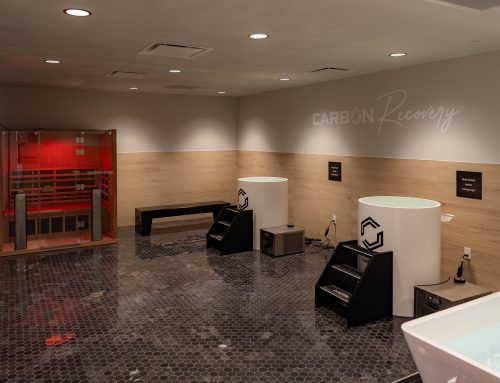
- Advanced recovery amenities and recovery lounges with tools such as cold plunge tubs and infrared saunas.
- Certified personal trainers who create structured, progressive training programs, along with nutrition coaching that aligns with your training demands and goals.
- An on-site Carbon Fuel Bar with shakes and meals designed to support performance and recovery.
Whether you are a busy professional trying to improve energy and performance, a beginner or woman looking for a supportive training environment without the intimidation factor, or an elite athlete working to improve conditioning and strength, Carbon Performance provides the right environment and support needed to build the lasting endurance necessary to reach your fitness goals.
Stop by a location near you for a facility tour and to learn how our environment and personal training can support your health and fitness goals.
Sources
European Journal of Applied Physiology: The effects of high-intensity interval training versus moderate-intensity continuous training on athletes’ aerobic endurance performance parameters
Journal of Sports Sciences: Interval vs moderate-intensity training in endurance runners: systematic review
Journal of Human Kinetics: HIIT vs MICT effects on running economy: meta-analysis
Journal of Functional Morphology and Kinesiology: Aerobic exercise training and VO₂ max: scoping review
Frontiers in Aging: Enhancing active aging through HIIT vs continuous training
Journal of Strength & Conditioning Research: HIIT vs sprint interval training on endurance performance
Frontiers in Physiology: Effects of HIIT and MICT on mitochondrial dynamics
FASEB Journal: Aerobic capacity and mitochondrial function in aging
Medicina: HIIT vs continuous training in cardiovascular health.
BMC Sports Science: Interval training methods and oxygen uptake: network meta-analysis.